News
Released in 1957, this rock and roll classic changed music forever. Nearly 70 years later, its energy still feels timeless—but few remember the incredible story behind the song.
There are songs that become hits for a season, and then there are songs that seem to capture a moment so perfectly that they continue echoing through generations long after the charts have forgotten everyone else.
In the summer of 1957, Buddy Holly did exactly that with “That’ll Be the Day,” a record that helped ignite the rock and roll revolution and introduced the world to a young musician whose influence would reach far beyond his tragically short life.

The song arrived during a time when American music was changing rapidly, as teenagers searched for sounds that felt different from the polished pop records their parents had grown up with.
With its infectious rhythm, confident vocal delivery, and unforgettable hook, “That’ll Be the Day” sounded like the future rushing through a radio speaker.
Born Charles Hardin Holley in Lubbock, Texas, Buddy Holly grew up surrounded by country, western swing, gospel, and rhythm and blues, absorbing musical influences that would later shape his distinctive style.
Unlike many performers of his era, Holly was not merely a singer standing in front of a band but a musician deeply involved in crafting his own sound and artistic identity.
His thick-rimmed glasses, youthful appearance, and humble personality made him seem approachable, yet his musical instincts were years ahead of his time.
Before success finally arrived, Holly endured setbacks that might have convinced a less determined artist to abandon his dream altogether.
Early recordings failed to gain significant traction, and industry executives often struggled to understand exactly how to market his unique blend of country roots and rock and roll energy.
Instead of changing who he was, Holly continued refining his music until he found the formula that would change everything.
That breakthrough came when he and his band, The Crickets, recorded “That’ll Be the Day,” a song inspired by a line from the 1956 western film “The Searchers.”
The phrase carried a playful confidence that perfectly matched the rebellious spirit beginning to define teenage culture across America.
![Holley, Charles Hardin [Buddy Holly]](https://www.tshaonline.org/images/handbook/entries/HH/holley-charles-hardin.jpg)
From its opening guitar chords, the record projected an energy that felt fresh, exciting, and impossible to ignore.
Holly’s vocal performance balanced toughness and vulnerability, creating a sound that connected immediately with young listeners.
The lyrics tell the story of someone refusing to believe promises that seem destined to be broken, turning romantic skepticism into an irresistible anthem.
What made the song especially powerful was its simplicity, because every line felt direct enough for anyone to understand while remaining memorable enough to sing for years afterward.
When the single was released, audiences responded with enthusiasm that exceeded even the band’s highest expectations.
The record quickly climbed the charts, eventually reaching No. 1 in both the United States and the United Kingdom.
Suddenly, Buddy Holly and The Crickets were no longer regional performers from Texas but international stars helping define an entirely new musical era.
The success of “That’ll Be the Day” established a blueprint that countless future rock bands would follow in the decades ahead.
Unlike many recordings of the period, the song emphasized the chemistry of a self-contained group rather than focusing exclusively on a single frontman.
Young musicians everywhere began imagining themselves not just as singers but as bands writing and performing their own material.
The influence of Holly’s approach would eventually be felt in garages, clubs, and recording studios across the world.
Years later, members of The Beatles openly acknowledged the enormous impact Buddy Holly had on their musical development.
The very name “The Beatles” was partly inspired by “The Crickets,” reflecting how deeply Holly’s legacy became woven into the fabric of popular music.
His songwriting style demonstrated that rock and roll could be intelligent, personal, and artistically ambitious without losing its youthful excitement.
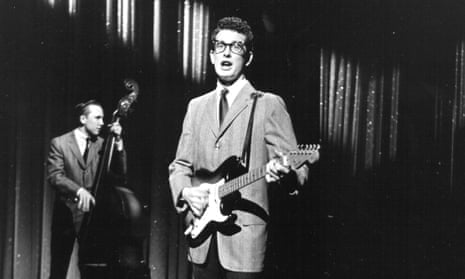
Listening to “That’ll Be the Day” today reveals qualities that still feel remarkably modern despite the decades that separate us from its release.
The guitar work remains crisp and energetic, while the vocal harmonies continue to provide warmth and emotional texture.
Nothing feels overproduced or artificial, allowing the song’s personality to shine through with remarkable clarity.
Part of the song’s enduring appeal comes from its sense of optimism, even when discussing disappointment and broken trust.
There is a confidence in Holly’s voice that suggests heartbreak may hurt, but it will never completely defeat the human spirit.
That emotional balance helped the record resonate with listeners from different generations and backgrounds.
As rock music evolved through the 1960s and beyond, “That’ll Be the Day” remained a reference point for artists seeking authenticity.
Musicians admired the song not only because it was successful but because it demonstrated how much could be accomplished with honesty, melody, and imagination.
Its influence can be heard in countless recordings that followed, even when listeners may not immediately recognize the connection.
The tragedy of Buddy Holly’s story inevitably adds another layer of emotion when revisiting his greatest work.
In 1959, only two years after “That’ll Be the Day” transformed his career, Holly lost his life in a plane crash at the age of twenty-two.
The shocking event ended one of the most promising careers in music history before it had fully revealed its potential.
Yet the brevity of his life has never diminished the magnitude of his impact on popular culture.
Instead, songs like “That’ll Be the Day” continue serving as reminders of what made Buddy Holly so extraordinary.
His recordings preserved a creative spirit that refused to accept limitations and constantly searched for new possibilities.
Each generation that discovers the song experiences a small piece of the excitement listeners felt during that remarkable summer of 1957.
Today, nearly seven decades after its release, “That’ll Be the Day” remains one of rock and roll’s defining recordings.
Its catchy melody, pioneering sound, and timeless message continue attracting new audiences while rewarding longtime fans with every listen.
More than just a hit record, it stands as a symbol of youthful ambition, musical innovation, and the enduring power of a great song.
Buddy Holly may have left the world far too soon, but “That’ll Be the Day” ensures that his voice still echoes through the years, carrying with it the excitement, hope, and restless energy that helped change music forever.
